Palavras-chave
Educación
Naturaleza
Derechos
Aprendizaje
Bio-centrismo
Como Citar




Resumo
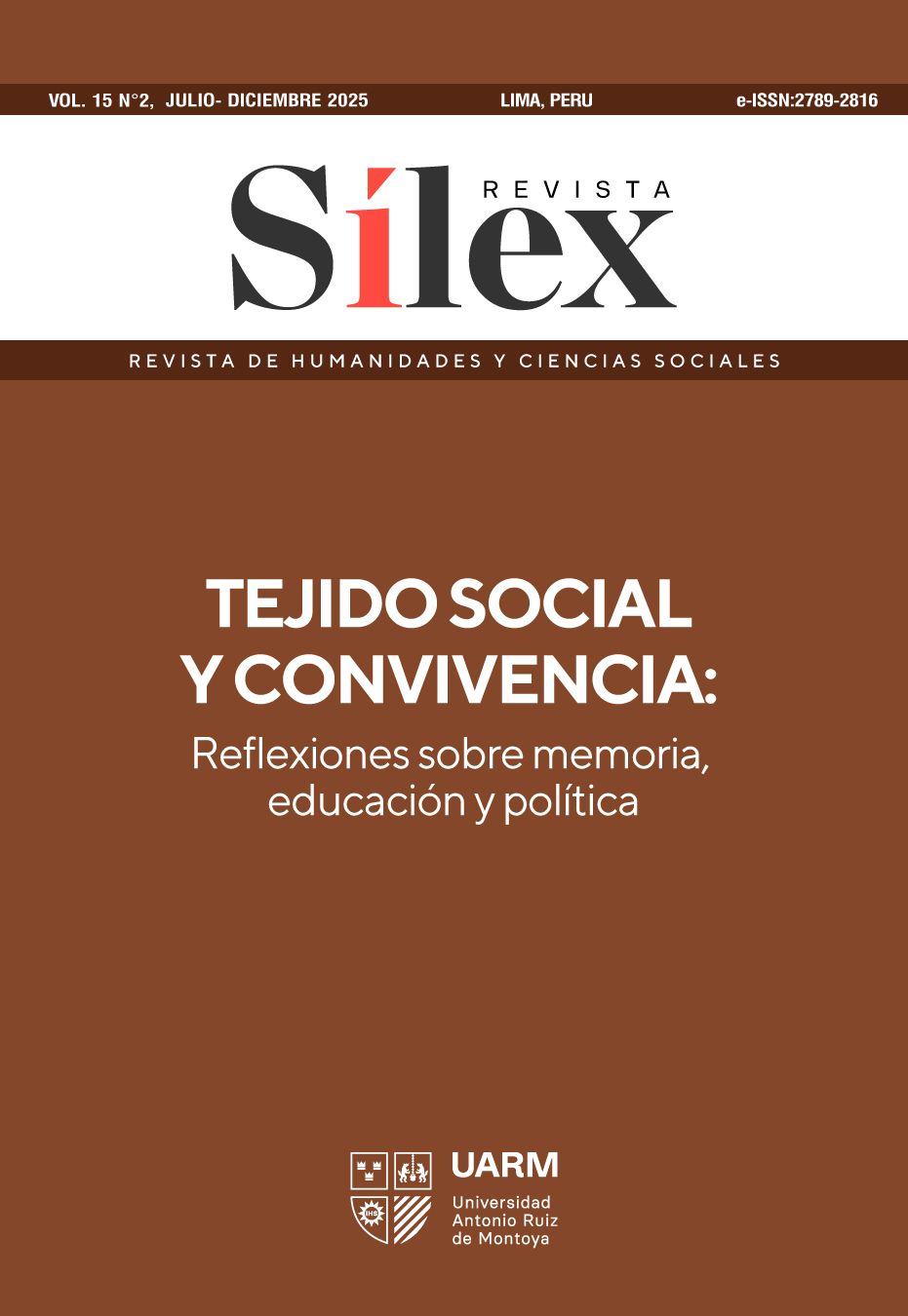
El “buen vivir” es un concepto que enfatiza la armonía con la naturaleza. En el ámbito educativo, el concepto contrasta con las visiones europeas de la educación encarnadas en modelos como Ausbildung (instrucción), Bildung (formación) y Erziehung (autocultivo). En el presente ensayo se discuten algunos ejemplos de prácticas educativas del buen vivir, que ilustran un enfoque bio-céntrico del aprendizaje y la gestión de la sociedad y el territorio. El texto concluye enfatizando la necesidad de alinear los sistemas educativos en todo el mundo con el bio-centrismo, reconociendo la equivalencia entre los procesos de aprendizaje y los procesos de vida.
Descargas
Referências
Banco Mundial. (2020). World Development Report on Education: Learning to Realize Education’s Promise. Banco Mundial.
Biesta, G. (2002). Bildung and modernity: The future of Bildung in a world of difference. Studies in Philosophy and Education, 21(5), 343-351. https://doi.org/10.1023/A:1019874106870.
Biesta, G. (2017). Tussen reflexiviteit en vrijheid: ‘Bildung’ en ‘Erziehung’ als twee paradigmas voor persoonsvorming in het onderwijs. Waardenwerk, 70/71, 85-92.
Carnoy, M. (2007). The impact of educational quality on development goals. Stanford University Press.
Clement, W. (2005). Vorrang für die Anständigen – Gegen Missbrauch, “Abzocke” und Selbstbedienung im Sozialstaat: Ein Report zum Arbeitsmarkt im Sommer. Arbeitsmarktanalyse.
Dépelteau, F. (2008). Relational thinking: a critique of co deterministic theories of structure and agency. Sociological Theory, 26 (1). https://doi.org/10.1111/j.1467-9558.2008.00318.x
De la Cadena, M. (2020). Cosmopolítica indígena en los Andes : reflexiones conceptuales más allá de la "política". Tabula Rasa, 33, 273-311. https://doi.org/10.25058/20112742.n33.10
Escobar, A. (1999). After nature: steps to an antiessentialist political ecology. Current Anthropology, 40(1), 1-30. https://www.journals.uchicago.edu/doi/abs/10.1086/515799
Fernández, R., Acevedo, I., Székely, M., & Pagés, C. (2024). Education Inequalities in Latin America and the Caribbean. Inter-american Development Bank. http://dx.doi.org/10.18235/0005244
Granadino, C. (1993). Cuentos de nuestros abuelos quechuas: Recuperando la tradición oral. Wasapay Ediciones.
Gudynas, E. (2009). La ecología política del giro biocéntrico en la nueva Constitución de Ecuador. Revista De Estudios Sociales, 1(32), 34-47. https://doi.org/10.7440/res32.2009.02
Gudynas, E. (2011). Los derechos de la naturaleza en serio: Respuestas y aportes desde la ecología política. En A. Acosta & E. Martínez (Comps.), La naturaleza con derechos: De la filosofía a la política (pp. 203-218). AbyaYala & Universidad Politécnica Salesiana.
Gudynas, E. (2014). Buena vida, buen vivir: imaginarios alternativos para el bien común de la humanidad. Centro de Investigaciones Interdisciplinarias en Ciencias y Humanidades, UNAM.
Gudynas, E. & Acosta, A. (2011). La renovación de la crítica al desarrollo y el buen vivir como alternativa. Utopía y Praxis Latinoamericana, 16 (53), 71–83. https://produccioncientificaluz.org/index.php/utopia/article/view/3419
Hernández, G., & Laats, H. (2021, 8 de enero). Buen Vivir: ¿Un concepto emergente en Europa? Green European Journal. https://www.greeneuropeanjournal.eu/buen-vivir-un-concepto-emergente-en-europa/
Horsthemke, K. (2019). Anthropocentrism, education and the (post-)Anthropocene. On Education: Journal for Research and Debate, 2(4). https://doi.org/10.17899/on_ed.2019.4.1
Huanacuni, F. (2010). Buen Vivir/Vivir Bien. Filosofía, políticas, estrategias y experiencias regionales andinas. Coordinadora Andina de Organizaciones Indígenas CAOI.
Huijer, M. (2015). Bildung: The toothless tiger. Trouw. Accedido de https://www.trouw.nl/nieuws/bildung-de-tandeloze-tijger~b36460f0/
Humboldt, W. von. (1793-1794). Theorie der Bildung des Menschen. En A. Flitner & K. Giel (Eds.), Werke in fünf Bänden: Schriften zur Anthropologie und Geschichte (pp. 234-240). Wissenschaftliche Buchgesellschaft.
Klafki, W. (1998). Neue Studien zur Bildungstheorie und Didaktik. Weinheim: Beltz.
Kvamme, O. A. (2022). Rethinking Bildung in the Anthropocene. HTS Theological studies, 77(3). https://doi.org/10.4102/hts.v77i3.6807
Laats, H., & Hernandez, G. (2020). La cuenca Comarapa en Bolivia: Construir resiliencia frente al cambio climático. LEISA: Revista de Agroecología, 36(2). https://www.leisa-al.info/index.php/journal/article/view/66
López, M. (2005). Equidad educativa y desigualdad social. Instituto Internacional de Planeamiento de la Educación (IIPE-UNESCO).
Merleau-Ponty, M. (1996). Fenomenología de la percepción. Barcelona: Península.
Nordenbo, S. E. (2002). Bildung and the thinking of Bildung. Journal of Philosophy of Education, 36(3), 341-352. https://doi.org/10.1111/1467-9752.00280
Orlove, B. S. (2002). Lines in the Water: Nature and Culture at Lake Titicaca. University of California Press
Trucco, D. (2014). Educación y desigualdad en América Latina. Santiago de Chile: Comisión Económica para América Latina y el Caribe (CEPAL).
Van Norren, D. E. (2017). Development as service: A happiness, Ubuntu, and Buen Vivir interdisciplinary view of the Sustainable Development Goals. Doctoral dissertation, Tilburg University.
Urton, G. (1981). At the Crossroads of the Earth and the Sky: An Andean Cosmology. University of Texas Press.
Zegers, R. (2024). Making nature social: Towards a relationship with nature. Lexington Books.

Este trabalho está licenciado sob uma licença Creative Commons Attribution 4.0 International License.
Copyright (c) 2025 Gustavo Hernández Nieva, Henkjan Laats