Keywords
Education
Interculturality
Diversity
How to Cite




Abstract
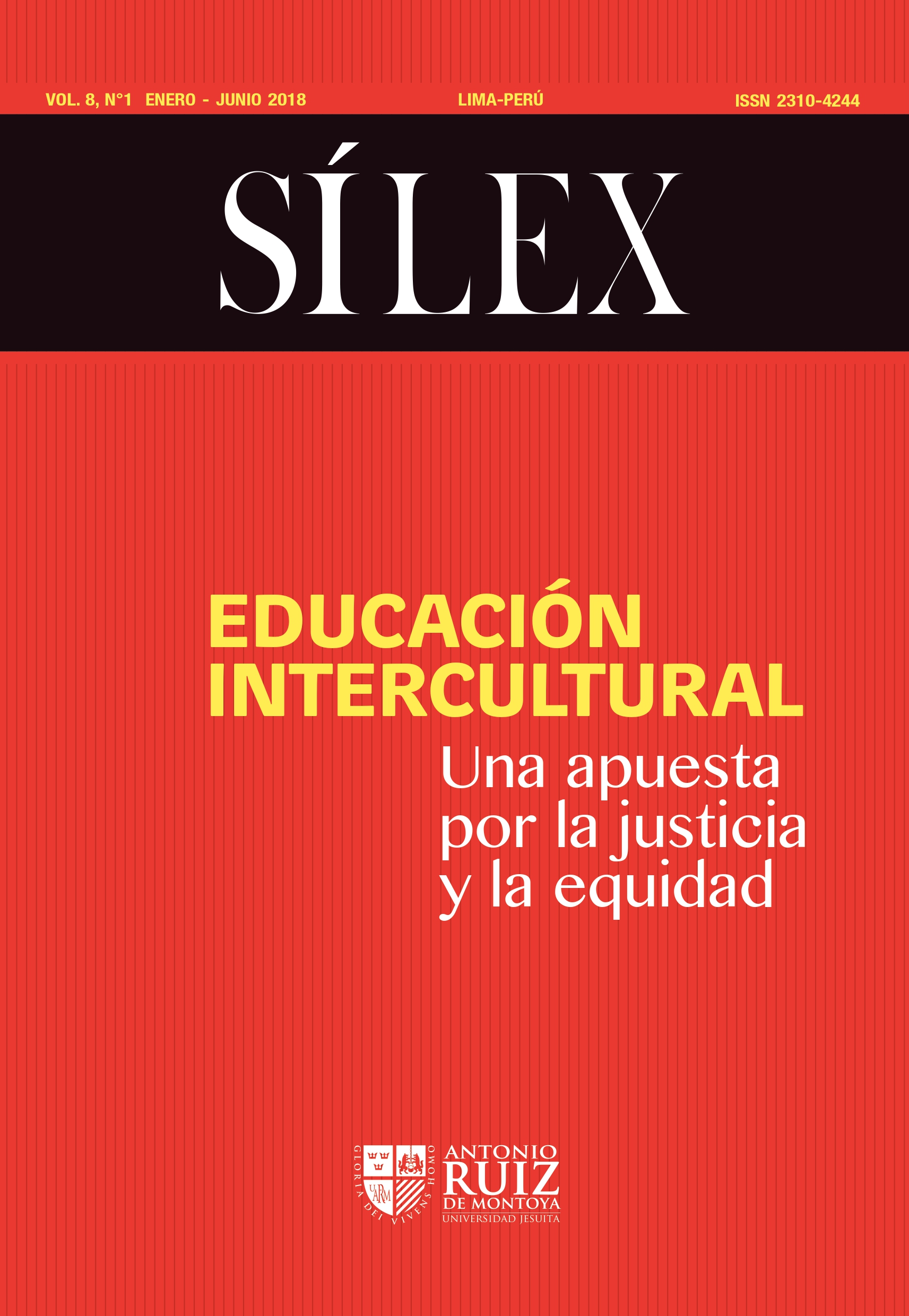
The results of a research about scholar’s necessities and demands, language, culture and identity of Andean children in two schools in San Juan de Lurigancho district (Lima, Peru), permitted us to reflect about the possibilities and scopes of an intercultural education in the city. The aim of this study is to contribute at the educational system thinking in the recent “National Intercultural Education and Bilingual Intercultural Education Policy” of the Ministry of Education (2016). We could observe and identify how teachers managed the linguistic and cultural diversity of Peru in their rooms and in the school. In addition, they give less importance to Andean knowledge that children and their family have. History, knowledge and cultural practices are not include in the scholar’s curriculum and pedagogy. Live in the city means forget. So, we ask: is an intercultural education possible in the city?, which are their implications?
Descargas
References
CEPAL. (2011). Atlas sociodemográfico de los pueblos indígenas del Perú. Santiago de Chile: CEPAL-NNUU.
CEPAL. (2014). Los pueblos indígenas en América Latina. Avances en el último decenio y retos pendientes para la garantía de sus derechos (Síntesis). Santiago de Chile: CEPAL-NNUU.
García, S., Tamagno, L., & Ibáñez Caselli, M. (2003). Educación/Diversidad/Desigualdad. Indígenas toba más allá de los territorios de origen [CD-ROM]. Buenos Aires: Red NAYA.
López, L. (2015, mayo). Cambios de época y reinvención de la educación con pueblos indígenas en América Latina. Conferencia pronunciada en el Coloquio Nuevos Contextos y Desafíos en la Implementación de la EIB, Lima, Perú.
MINEDU. (2016). Política Nacional Sectorial de Educación Intercultural y Educación Intercultural Bilingüe. Lima: MINEDU-DIGEIBIRA.
Sichra, I. (2004). Bilingüismo e interculturalidad en áreas urbanas (Documento de la línea de investigación). Cochabamba: PROEIB Andes.
Suxo, M. (2007). La educación intercultural en áreas urbanas. Pueblos Indígenas y Educación, (59), 63-74.
Suxo, M. (2008). La voz de una nación: Los aymaras de Lima Metropolitana. Caso Unicachi. Lima: UNICEF-EIBAMAZ-San Marcos.
Tubino, F. (s.f.). Del interculturalismo funcional al interculturalismo crítico. RED PUCP. Recuperado de https://centroderecursos.cultura.pe/es/registrobibliografico/del-interculturalismo-funcional-al-interculturalismo-cr%C3%ADtico
UNICEF-FUNPROEIB Andes. (2009). Atlas sociolingüístico de pueblos indígenas en América Latina. Cochabamba: UNICEF-FUNPROEIB Andes-AECI.
Vega, I. (2003). Ciudadanías en construcción: Participación y surgimiento de una ciudadanía indígena. En N. Vigil & R. Zariquiey (Eds.), Ciudadanías inconclusas: El ejercicio de los derechos en sociedades asimétricas (pp. 203-216). Lima: GTZ-PUCP.
Vega, I. (2014). Buscando el río: Identidad, transformaciones y estrategias de los migrantes indígenas amazónicos en Lima Metropolitana. Lima: Terra Nuova-CAAAP.
Walsh, C. (2009). Interculturalidad crítica y educación intercultural. Recuperado de https://www.uchile.cl/.../interculturalidad-critica-y-educacion-intercultural_110597_0_2405
Zúñiga, M. (2008). La educación intercultural bilingüe: El caso peruano. Lima: FLAPE-Foro Educativo.

This work is licensed under a Creative Commons Attribution 4.0 International License.
Copyright (c) 2026 María Amalia Ibáñez Caselli